
The Story of Cotton: From Fibre to Fabric
A fibre that became part of everyday life
Soft, breathable and wonderfully versatile, cotton is one of the most familiar fabrics in the world. We wear it, live in it and rely on it every day. Yet, behind a simple cotton shirt or a comfortable pair of trousers lies a fascinating journey — one that begins in a small cotton boll and passes through generations of textile knowledge and craftsmanship.
In India, cotton is more than just a fibre. It is part of our textile heritage.

1. Where the journey begins: The cotton plant
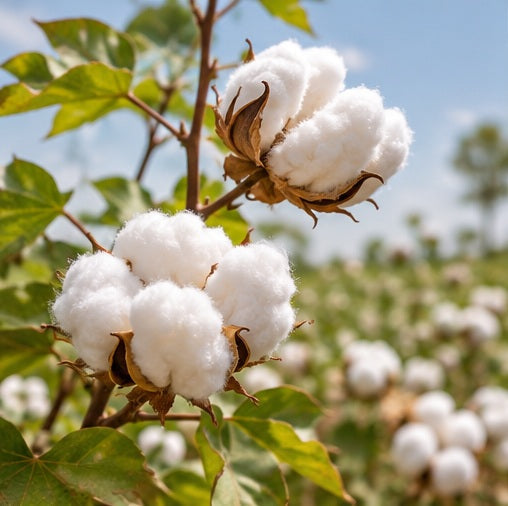
Cotton begins its journey as a natural fibre growing around the seeds of the cotton plant. When the cotton bolls mature, they open to reveal soft, fluffy white fibres.
These fibres are carefully harvested and separated from the seeds through a process known as ginning.
What looks like a simple handful of cotton is actually the beginning of a remarkable transformation.

2. From raw fibre to yarn
Before cotton can become fabric, its fibres must be prepared and spun into yarn.
The fibres are cleaned, aligned and drawn out into long, continuous strands. These strands are then twisted together to create yarn.
The quality of the yarn plays an important role in the feel, strength and appearance of the final fabric. Fibre length, fineness and spinning technique all contribute to the result.

3. The art of weaving
Yarn becomes fabric through weaving or knitting.
In weaving, two sets of yarns — the lengthwise warp and crosswise weft — are interlaced to form a fabric structure. Different weaving patterns create different textures, weights and appearances.
From lightweight cotton suitable for warm weather to stronger fabrics used in trousers and shirts, the construction of the fabric makes a noticeable difference.

4. India's deep connection with cotton
India has a long and celebrated history of cotton cultivation, spinning and weaving.
India is one of the world's most important cotton-producing nations. It ranks second globally in cotton production and first in the area devoted to cotton cultivation. Producing nearly one-fifth of the world's cotton, India continues to play a significant role in the global textile industry. This remarkable connection between agriculture, craftsmanship and textiles is a legacy that continues to shape the country's identity.
For centuries, Indian cotton textiles travelled across regions and countries, admired for their variety, craftsmanship and quality. Traditional weaving centres developed distinctive fabrics, patterns and techniques that continue to inspire textile makers today.
This heritage is not simply a story of the past. It continues through the people, skills and knowledge that shape India's textile industry.
5. What makes cotton so comfortable?
Cotton is valued for qualities that make it especially suitable for everyday clothing.
- Breathability: Cotton allows air to circulate through the fabric.
- Softness: Well-made cotton fabrics can feel gentle and comfortable against the skin.
- Moisture absorption: Cotton absorbs moisture, helping it feel comfortable in warm conditions.
- Versatility: It can be woven into fabrics of different weights, textures and finishes.
- Easy styling: Cotton works equally well in casual and more formal clothing.
The final comfort, however, depends on more than the fibre alone. Yarn quality, fabric construction, finishing and garment design all matter.

6. From fabric to a finished garment
The journey does not end when the fabric comes off the loom.
The fabric is inspected, measured, cut and stitched. Seams, pockets, waistbands and finishing details all contribute to how a garment looks and performs.
Even a simple pair of cotton trousers involves several decisions — from selecting the right fabric to ensuring a comfortable fit and a neat finish.
Good garment making is a combination of material knowledge, careful construction and attention to detail.

7. The value of understanding fabric
When choosing clothing, we often notice the colour, style and fit first. But understanding the fabric helps us appreciate what goes into a garment.
The feel of cotton, the way it holds its shape, its weave and its finishing can all influence the experience of wearing it.
A well-made garment begins long before the first stitch. It begins with understanding the material.
A tradition that continues
At Botanica, our connection with textiles comes from decades of experience in the industry. We believe that quality begins with the fabric and continues through every stage of garment manufacturing.
Because what you wear is not just about how it looks. It is also about how it feels, how it is made and the care behind every detail.
Botanica — We manufacture quality, not just garments.